
Armor Sportsman Sunflower Plot Seed Product Specs
- Minimum germination guarantee: 90%
- True hybrid and same hybrid year in, year out
- Bag size: 10 lb. & 25 lb. options
- High quality, uniform size graded seed
- Seed size: 2, 3, & 4 (actual seed size and maturity listed on tag)
- Clearfield® Production System trait for effective weed control
- Compatible with CruiserMaxx® Sunflowers, Dynasty® and Lumisena™ fungicide seed treatments
Sunflower
Food Plot Benefits
Why Sunflowers?
There are several factors that make sunflowers a highly attractive food plot source for birds and desirable for landowners, as well:
Nutritional Value:
Sunflower seeds are chock full of nutrients, proteins, vitamins and fats that are essential for the metabolism of doves and many other birds and wild animals. Once the crop reaches full maturity, seeds are easily accessible to doves.
Yearlong wildlife habitat:
Leaving the stalks standing and fields undisturbed over winter also provides an excellent food source for wildlife.
Increase leased land value:
Planting food plots for doves and other game animals can increase the value of hunting land when leasing to groups or individuals.
Drought tolerant:
Sunflowers are generally known as a drought-tolerant crop, which is helpful when dry growing conditions persist. Thanks to a deep taproot that extends 4 to 6 feet, sunflowers can access residual soil moisture and nutrients that are lost to most other crops.
Weed control:
Both of our Armor® Sportsman sunflower plot seed products – Armor Dove Pro 21 and Dove Pro 55 – are armed with the Clearfield® Production System trait. This allows for an in-season application of Beyond® herbicide, which provides the best weed control results when it's applied between the 2- and 8-leaf stages. Introducing this alternate mode-of-action on your field also has the potential to control weed populations that have developed resistance to other herbicides. In addition to improving sunflower yield potential, effective weed control also helps provide doves with bare ground for feeding.
Improve soils:
When left undisturbed after the growing season, a sunflower crop’s decomposing root system can increase your soil’s organic matter content and water holding capacity. The deep taproot can also help alleviate soil compaction issues.
Good rotation crop:
Sunflowers rotate well with other crops that are used for dove food plots, such as corn, milo, millet, wheat and even barley.
Food Plot Establishment
Choosing the right location and planting the right size is key to creating a successful food plot. You might be able to attract doves with a small sunflower plot, but you'll get them to stay by establishing a larger, well-managed plot with the right surroundings.
Location Selection
When choosing an area for your food plot, make sure there are good nesting and roosting areas nearby. From an agronomic perspective, you also should seek out a well-drained, fertile site that can be easily accessed by planting and maintenance equipment.
Important dove habitat considerations include:
- Nesting cover, like trees and shrubs.
- Roosting cover and perching sites, like power lines, tree groves or fence line shrubs.
- Dependable sources for grit and fresh water within a mile.
Plot Size
The most common food plot sizes are 5–20 acres. You'll still attract doves if you plant smaller fields, but they won't hold a good quantity of birds in the long term. Smaller fields will also require you to more closely manage the number of birds harvested and frequency at which they're hunted. If you're looking to attract a larger number of birds, larger food plots are better.
If space and budget permits, you might want to consider planting two separate sunflower food plots within the same vicinity so you can hunt them on an even/odd day schedule. This practice can help doves feel more comfortable, which can help you retain more birds.
About Mourning Doves
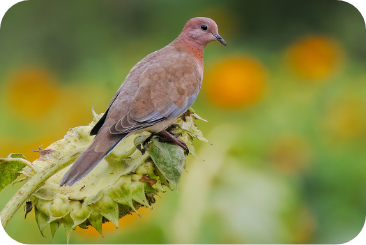
Feed, Migration & Roosting
Mourning doves are slim, fast-flying birds valued by hunters and birdwatchers, known for their tender, delicately flavored meat.
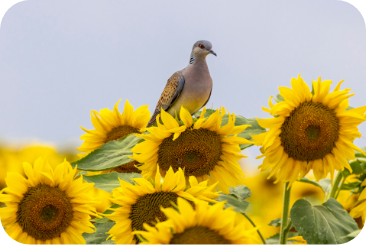
Feeding Behavior
They quickly gather seeds on the ground, then rest to digest them, using swallowed grit to help break down food.
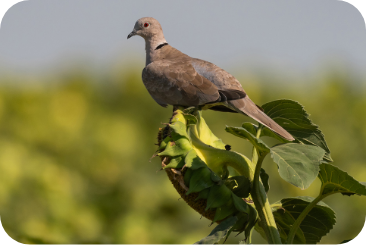
Diet
Their diet is mainly seeds from grains, grasses, and weeds, with occasional snails and very few insects.
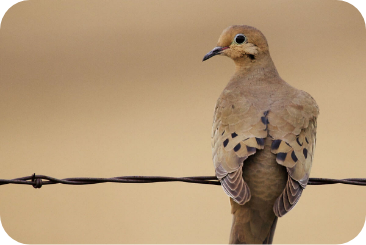
Migration
Northern mourning doves migrate south in fall to avoid cold, while southern populations often remain year-round.